

Meeting Streams
A Meeting Stream is a recurring meeting definition tied to a Jira board. Each stream has its own participants, roles, schedule, questions, and meeting history.
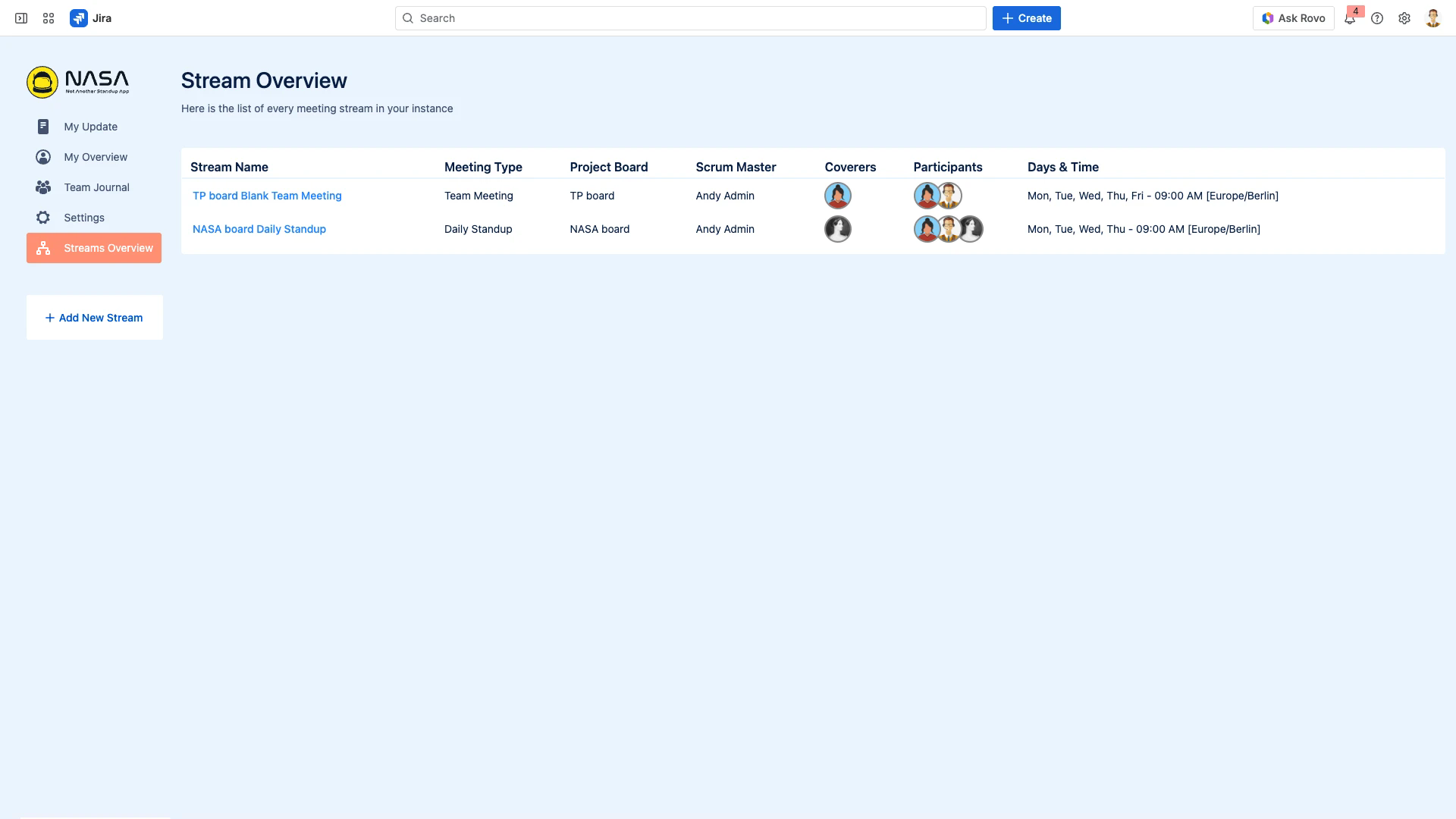
What a Stream Contains
Stream types cannot be converted
You cannot convert an existing stream between Standup and Team Meeting types. Create a new stream with the correct meeting type instead.
Participants - Scrum Master, Coverer(s), and Participants
Meeting Type - Standup or Team Meeting (cannot be changed after creation)
Jira Board - The board or project the stream references
Schedule - Meeting days, times, and Slack reminders
Questions - Structured agenda questions for My Update
Meeting History - Team Journal entries for past meetings
How to Create a Stream
Quick Setup with Templates
Go to Streams Overview and click Add New Stream (or the + button).
Select a Meeting Template - options include Daily Standup, Sprint Planning, Sprint Review, Sprint Retrospective, One-on-One, Brainstorming, Project Kickoff, and more.
The template configures the meeting type, questions, and time suggestions automatically.
Adjust settings to match your team's needs.
Click Create.
See Meeting Templates for the full list of 11 available templates.
Manual Setup
Go to Streams Overview and click Add New Stream.
Select Daily Standup or Blank Team Meeting.
Name the stream (e.g., "Frontend Team Daily Standup").
Select the Jira board, configure the schedule, and add participants.
Configure questions and other settings.
Click Create.
Managing Streams
Switching Between Streams
Use the Select Meeting Stream dropdown at the top of the NASA interface. Your role and permissions may differ between streams.
Multiple Streams
Create separate streams for different workflows:
Daily standups for quick synchronization
Weekly sprint planning sessions
Bi-weekly retrospectives
Monthly brainstorming sessions
Ad-hoc one-on-ones
Each stream maintains independent meeting history, participant lists, schedules, and settings.
Stream Duplication
Scrum Masters and Coverers can duplicate a stream to copy its configuration (name, board, questions, suggested issues, context fields, settings, logo). Optionally include users, filters, and automations.
Go to Settings and click Duplicate Stream at the bottom of the page.
Stream Privacy
Hide a stream from non-participants by enabling Stream Privacy in Settings > General > Meeting Settings. Private streams do not appear in the Streams Overview for users who are not assigned to them.
Archiving Streams
Archive streams that are no longer active to keep the Streams Overview clean. Archived streams preserve their meeting history.
Best Practices
Use descriptive names - include the team name and meeting type (e.g., "Frontend Team Daily Standup")
Start with templates - they provide tested configurations for common agile ceremonies
Customize over time - adjust questions and settings based on team feedback
Archive unused streams - keep the stream list manageable
See Meeting Templates for detailed information about available templates.